
AV Integration Company
Technology is shaping the way businesses communicate, collaborate, and engage with teams across locations. From hybrid meeting rooms and training spaces to smart classrooms and auditoriums, organizations are investing in audio-visual solutions that support productivity and improve user experiences.
However, successful AV projects are not defined by equipment alone. The real value comes from how displays, microphones, speakers, cameras, control systems, and collaboration tools work together within a space. This is where choosing the right AV Integration Company becomes important.
An experienced AV Integration Company helps businesses design, implement, and support AV environments that are practical, scalable, and easy to use. Before signing an agreement, it is worth understanding the factors that separate a reliable AV partner from the rest.
What Does an AV Integration Company Do?
An AV Integration Company specializes in bringing together different audio-visual technologies into a single, seamless solution. Instead of treating displays, audio systems, video conferencing platforms, and control systems as separate components, they create an environment where everything works together smoothly.
Their responsibilities often include:
- Site surveys and consultation
- AV system design and planning
- Product selection and recommendations
- Installation and configuration
- User training
- Ongoing support and maintenance
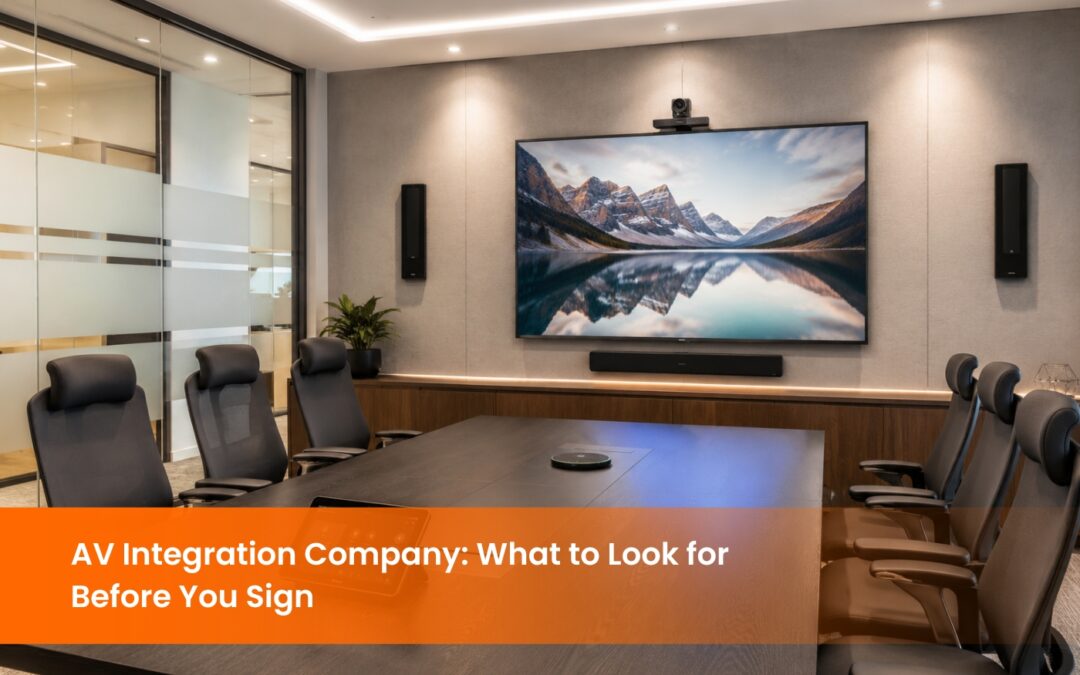
For example, in a corporate boardroom, an AV Integration Company ensures that microphones, displays, cameras, speakers, and collaboration tools function as one unified system. The result is a meeting experience that feels intuitive for employees and visitors alike.
Integration work rarely stops at the meeting room door. Reception walls, wayfinding and canteen boards fall under the same brief, and signage solutions are typically designed alongside conferencing so that content and cabling share one plan.
Why Choosing the Right AV Integration Company Matters
The demand for smart workplaces and hybrid collaboration spaces has increased significantly in recent years. Businesses now expect meeting rooms to support in-person discussions, remote participation, wireless content sharing, and seamless communication.
Industry insights from AVIXA’s professional AV industry research highlight how integrated AV technologies are supporting collaboration, communication, and evolving workplace requirements across different sectors.
A qualified AV Integration Company helps ensure that technology supports these goals effectively.
Choosing the right partner can help organizations:
- Improve meeting experiences
- Support hybrid work environments
- Simplify room operation
- Create consistent user experiences
- Enable future technology upgrades
- Maximize the value of AV investments
A well-integrated AV environment helps people focus on communication and collaboration rather than learning complicated technology.
Industry Experience Makes a Difference
Not all AV projects are the same. The needs of a university classroom are different from those of a corporate boardroom or a healthcare training facility.
An AV Integration Company with experience across multiple industries can bring valuable insights into the planning process. They understand how different spaces are used and can recommend solutions that align with specific operational requirements. Meeting equity across in-person and remote participants has become the defining standard for effective AV integration across corporate, education, and government spaces.
When evaluating a provider, look at their experience in:
- Corporate offices
- Educational institutions
- Healthcare facilities
- Hospitality venues
- Government organizations
- Training centers
- Auditoriums and event spaces
Relevant project experience often leads to more effective recommendations and smoother implementation.
Design and Consultation Should Come First
A successful AV project starts long before installation.
A professional AV Integration Company should spend time understanding how the space will be used, who will use it, and what outcomes the organization expects. This consultation stage helps create solutions that are aligned with real business needs.
Good design planning considers:
- Room size and layout
- Seating arrangements
- Display visibility
- Audio coverage
- Lighting conditions
- Collaboration requirements
- Future expansion plans
The objective is to create a solution that feels natural and supports everyday workflows.
How Can You Evaluate an AV Integration Company Before Signing?
Many organizations compare AV providers primarily on pricing. While budget is important, there are several other factors worth evaluating.
Consider asking these questions:
- Do they conduct a site assessment?
- Can they share similar project examples?
- What brands and technologies do they work with?
- How do they approach user training?
- What support services are included?
- Can the solution grow with future requirements?
A reliable AV Integration Company will be transparent about its process and explain how the proposed solution supports your goals.
Reviewing project methodology can often reveal more about a company than simply comparing product specifications.
Support Matters Beyond Installation
Installation is only one stage of an AV project.
As technology evolves, organizations need systems that remain reliable and easy to manage. This is why ongoing support should be part of the evaluation process.
An AV Integration Company should provide:
- User training
- Technical assistance
- Preventive maintenance
- Software updates
- Troubleshooting support
- System performance reviews
Businesses with multiple meeting rooms or training spaces benefit particularly from structured support programs that help maintain consistency across locations.
A Growing Business Example
Consider a company expanding into a new office. Leadership invests in modern displays, conferencing systems, and collaboration tools for multiple meeting rooms.
Without a clear integration strategy, employees may spend valuable time learning different interfaces and troubleshooting connectivity issues. Each room may operate differently, creating inconsistencies across the workplace.
By working with an experienced AV Integration Company, the organization can standardize room experiences, simplify controls, and create a consistent collaboration environment throughout the office.
This approach helps employees use technology with confidence while supporting productivity and communication goals.
How Does an AV Integration Company Support Future Growth?
Technology requirements continue to evolve. Organizations often expand their offices, add new meeting spaces, adopt collaboration platforms, or introduce emerging technologies.
A forward-thinking AV Integration Company designs systems with scalability in mind.
Future-ready AV solutions can support:
- Additional meeting rooms
- New collaboration technologies
- Hybrid work initiatives
- Digital signage expansion
- Advanced room automation
- Enhanced user experiences
Planning for future growth helps organizations make technology decisions that continue delivering value over time.
Conclusion
Selecting the right AV Integration Company is an important step in creating meeting rooms, training environments, classrooms, and collaboration spaces that support modern communication needs.
Organizations that focus on experience, design expertise, support capabilities, and future scalability are better positioned to create AV environments that deliver long-term value. The right partner helps ensure that technology is practical, user-friendly, and aligned with business objectives.
If your organization is planning a new AV project or upgrading an existing space, explore our AV Integration Company solutions to discover how EIS TechInfra Solutions can help create connected, efficient, and future-ready environments.
Stay updated with the latest news, insights, and exclusive content by following us.
FAQ
What is an AV Integration Company?
An AV Integration Company designs, installs, and supports audio-visual systems for workplaces, educational institutions, hospitality spaces, and commercial environments. It ensures that displays, audio systems, conferencing tools, and control technologies function together as a complete solution.
How do I choose the right AV Integration Company?
Start by reviewing industry experience, project portfolio, consultation approach, technology expertise, support services, and scalability planning. A reliable AV Integration Company will focus on understanding business needs before recommending solutions.
What industries benefit from AV integration services?
Corporate offices, educational institutions, healthcare facilities, hospitality venues, government organizations, training centers, and event spaces commonly benefit from AV integration services because they rely on effective communication and collaboration technologies.
What questions should I ask before signing with an AV Integration Company?
Ask about project experience, design methodology, installation process, user training, support availability, maintenance options, project timelines, and future scalability. These discussions help ensure the proposed solution aligns with business requirements.
Why should businesses work with an AV Integration Company?
Businesses work with an AV Integration Company to create AV environments that are easy to use, professionally designed, and aligned with operational goals. The company helps manage planning, installation, training, and ongoing support from a single source.
Does an AV Integration Company provide maintenance services?
Many AV integration providers offer maintenance services that include technical support, software updates, preventive inspections, troubleshooting, and user assistance. These services help ensure systems continue performing effectively over time.
Can an AV Integration Company help with hybrid meeting rooms?
Yes. An AV Integration Company can design meeting rooms that support both in-person and remote participants through integrated cameras, microphones, displays, and collaboration platforms, creating a consistent meeting experience for everyone involved.
How does an AV Integration Company support future technology upgrades?
Yes. An AV Integration Company can design meeting rooms that support both in-person and remote participants through integrated cameras, microphones, displays, and collaboration platforms, creating a consistent meeting experience for everyone involved.